| N-Type Monocrystalline PV Modules |
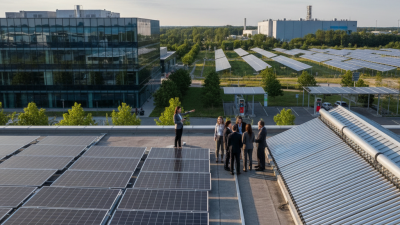
Common utility and commercial modules: approximately 430–650 W, module efficiency around 21%–24%, bifacial options available. |
Strong sunlight, rooftops, ground-mounted systems, and high-yield projects in dry or temperate regions. |
IEC 61215 for design qualification and IEC 61730 for safety; UL 61730 may be required in the United States and Canada; local grid and fire rules also apply. |
Residential, commercial, industrial, and utility-scale buyers seeking high energy yield per square metre. |
Check temperature coefficient, mechanical-load rating, degradation warranty, salt-mist certification, dimensions, and compatibility with the racking system. |
| Bifacial PV Modules |
Dual-glass or glass-backsheet designs, typically 430–650 W; rear-side energy gain depends on albedo, row spacing, height, and ground conditions. |
Bright ground-mounted sites, snow-covered areas, light-coloured roofs, and locations with high reflected irradiance. |
IEC 61215 and IEC 61730; verify whether the declared bifacial gain method and energy model are accepted by the project lender or authority. |
Utility developers, agrivoltaic projects, large commercial rooftops, and buyers with adequate rear-side clearance. |
The additional rear-side output is site-dependent; avoid paying a premium where modules are tightly mounted over dark roofs or shaded ground. |
| High-Wind and Heavy-Snow PV Modules |
Modules with enhanced mechanical-load ratings; project design commonly targets regional wind and snow loads rather than relying only on standard module ratings. |
Typhoon-prone coastlines, exposed rooftops, alpine regions, and areas with regular snow accumulation. |
IEC 61215 mechanical-load testing; structural design must follow local building codes, wind maps, snow maps, and racking requirements. |
Buyers in Japan, coastal Asia, northern Europe, North America, and other high-load environments. |
The module alone does not determine system resistance; mounting layout, clamps, roof structure, foundations, and installation quality are equally important. |
| Hot-Climate PV Modules |
Modules with a relatively low power temperature coefficient, commonly near −0.25% to −0.35% per °C for crystalline silicon products. |
Deserts, tropical regions, inland Australia, the Middle East, Africa, and other sites with high operating temperatures. |
IEC 61215, IEC 61730, and project-specific tests for damp heat, thermal cycling, UV exposure, and sand or dust conditions. |
Large solar farms and commercial buyers prioritising lifetime yield over nominal nameplate power alone. |
Compare energy yield at the local temperature and irradiance profile; plan ventilation, cleaning access, and dust-resistant electrical enclosures. |
| Salt-Mist and Humidity-Resistant PV Modules |
Corrosion-resistant materials and certified salt-mist or extended damp-heat performance where available; glass-glass construction is often selected for harsh exposure. |
Coastal zones, islands, humid tropics, and sites near saltwater or industrial pollution. |
IEC 61701 salt-mist testing at an appropriate severity level; IEC 61215 damp-heat testing; local corrosion and structural codes. |
Marine resorts, coastal homes, island microgrids, ports, and coastal utility projects. |
Inspect frames, fasteners, cable connectors, and racking as a complete corrosion-control system; module certification does not protect incompatible hardware. |
| Residential Hybrid Inverter |
Typically 3–15 kW, with MPPT inputs, battery charging, backup output, monitoring, and optional export limitation. |
Homes with variable grid reliability, time-of-use tariffs, rooftop PV, or a need for essential-load backup. |
IEC 62109 safety; IEC 61000 electromagnetic compatibility; IEC 62116 anti-islanding; local grid rules such as IEEE 1547, EN 50549, AS/NZS 4777.2, or country-specific requirements. |
Homeowners, installers, small offices, and rural properties requiring solar, battery, and grid integration. |
Verify single-phase or three-phase compatibility, battery voltage range, backup switching time, generator support, and utility approval. |
| Commercial String Inverter |
Approximately 20–125 kW per unit, multiple MPPT channels, three-phase output, and high-voltage DC input. |
Commercial rooftops, warehouses, factories, schools, and distributed ground-mounted arrays. |
IEC 62109, IEC 62116, IEC 61000, and applicable national grid-interconnection codes; outdoor installations may require suitable IP protection. |
Businesses needing modular installation, manageable maintenance, and flexible array design. |
Evaluate MPPT voltage windows, maximum short-circuit current, clipping ratio, arc-fault functions, service access, and communications protocols. |
| Utility-Scale Central Inverter |
Commonly several hundred kilowatts to multiple megawatts per power-conversion block, often paired with medium-voltage transformers. |
Large, uniform solar parks with centralised operations and professional maintenance teams. |
IEC 62109, IEC 62477-1 where applicable, IEC 61000, local grid codes, medium-voltage protection rules, and project-specific grid studies. |
Utility developers, independent power producers, and large infrastructure investors. |
Best suited to sites with centralised layouts; compare redundancy, spare-part strategy, transformer losses, grid-support functions, and service response time. |
| Lithium Iron Phosphate Battery System |
Modular residential systems commonly range from about 5–30 kWh; commercial systems may extend from tens of kWh to multiple MWh. |
Daily solar shifting, backup power, microgrids, and applications requiring a long cycle life and strong thermal stability. |
IEC 62619 for industrial lithium secondary batteries; UL 1973 and UL 9540/9540A may be relevant in North America; UN 38.3 is required for transport testing. |
Homes, commercial facilities, telecom sites, island systems, and renewable microgrids. |
Confirm usable capacity, depth-of-discharge limits, thermal management, fire separation, battery-management communications, warranty throughput, and installation clearances. |
| Outdoor Solar Battery Cabinet |
Integrated battery modules, battery-management system, HVAC or thermal control, fire detection, and weather-resistant enclosure; capacity varies from tens of kWh to MWh. |
Commercial and industrial sites with limited indoor space or a requirement for outdoor energy storage. |
IEC 62619, IEC 62933 series where applicable, UL 9540/9540A in relevant North American projects, local fire codes, and enclosure protection requirements. |
Factories, retail facilities, data-related loads, remote facilities, and microgrid operators. |
Assess ambient-temperature derating, flood risk, fire-service access, noise, ventilation, emergency shutdown, and local permitting before purchase. |
| Solar Water Pumping System |
PV-driven pump controller with submersible or surface pump; system sizing is based on daily water volume, total dynamic head, and solar resource. |
Agricultural areas, livestock operations, rural water supply, and locations with weak or absent grid service. |
IEC 60335-2-41 may apply to household and similar electric pumps; electrical installation, motor, water-quality, and local plumbing requirements must also be checked. |
Farmers, municipalities, humanitarian projects, and remote-property owners seeking to reduce diesel use. |
Water storage is often more economical than batteries; protect against dry running, sand, lightning, theft, and seasonal changes in water demand. |
| Solar Street and Area Lighting |
Integrated LED luminaire, PV module, battery, controller, and pole; typical systems use programmable dimming and dusk-to-dawn operation. |
Roads, pathways, parking areas, parks, campuses, and remote public infrastructure. |
IEC 60598-1 and relevant lighting safety standards; IEC 60529 for enclosure protection; local road-lighting, electrical, and photometric standards. |
Municipalities, property developers, schools, logistics yards, and off-grid communities. |
Specify required lux, uniformity, autonomy days, battery temperature range, pole wind rating, theft protection, and maintenance access. |
| Portable Solar Generator |
Portable battery power station generally from approximately 300 Wh to 5 kWh, with AC, DC, USB outputs, and solar charging input. |
Camping, emergency preparedness, field work, mobile medical support, and temporary power needs. |
UN 38.3 for lithium-battery transport; IEC 62368-1 or other applicable product-safety standards; plug, charger, EMC, and energy-labelling rules vary by market. |
Consumers, outdoor professionals, disaster-response teams, and small mobile businesses. |
Compare continuous versus surge output, usable watt-hours, recharge time, pass-through behaviour, weight, solar-input limits, and regional plug compatibility. |
| Solar Carport System |
PV canopy integrated with steel or aluminium structures; may include EV charging, drainage, lighting, and battery storage. |
Commercial parking areas, offices, retail sites, transport hubs, and properties with limited roof area. |
Local structural, wind, snow, drainage, electrical, accessibility, fire, and EV-charging requirements; PV equipment remains subject to IEC 61215 and IEC 61730. |
Commercial property owners, fleet operators, municipalities, and developers combining shade with clean electricity. |
Check foundation conditions, vehicle-clearance height, stormwater management, construction permits, cable protection, and charging demand profiles. |
| Solar EV Charging System |
AC charging commonly ranges from 3.6–22 kW; DC fast-charging systems can range from tens to hundreds of kilowatts, subject to grid capacity. |
Homes, workplaces, fleet depots, retail parking, and solar carports with predictable vehicle dwell times. |
IEC 61851 for conductive charging systems; IEC 62196 for plugs and vehicle couplers; local electrical, communications, payment, and grid-interconnection rules. |
EV owners, fleet managers, commercial sites, and public charging operators. |
Confirm connector type, load management, protection against residual current, software interoperability, peak-demand charges, and local network limitations. |
| Building-Integrated PV Glass |
Semi-transparent or opaque photovoltaic glazing integrated into façades, skylights, canopies, or curtain-wall elements; power output varies with transparency. |
New commercial buildings, transit facilities, façades, atriums, and projects where architectural integration is a priority. |
IEC 61215 and IEC 61730 for PV performance and safety; building glass, façade, fire, thermal, structural, and electrical codes are also mandatory considerations. |
Architects, developers, public-building owners, and buyers with strict visual or space constraints. |
Expect lower output at higher transparency; coordinate PV, glazing, waterproofing, structural, shading, and maintenance requirements during early design. |
| Off-Grid Solar Home System |
PV array, charge controller or hybrid inverter, battery, protection devices, and efficient loads; system size depends on daily energy use and autonomy target. |
Remote homes, rural electrification, islands, weak-grid areas, and locations where grid extension is costly. |
IEC 60364 installation principles, IEC 62109 inverter safety, IEC 62619 for applicable batteries, UN 38.3 for transport, and national low-voltage rules. |
Rural households, NGOs, telecom-supported communities, and remote businesses. |
Prioritise efficient appliances, local service capability, lightning and surge protection, spare parts, battery replacement planning, and realistic seasonal sizing. |
| Solar Monitoring and Energy Management System |
Web or gateway-based monitoring for PV production, consumption, battery state of charge, alarms, and remote performance analysis. |
All climates and system sizes, especially commercial sites where downtime and energy forecasting affect operating costs. |
Cybersecurity, data-protection, electrical measurement, communications, and utility demand-response rules vary by jurisdiction. |
Asset owners, installers, facility managers, utilities, and energy-service companies. |
Check data ownership, offline operation, API availability, alarm quality, communication redundancy, cybersecurity updates, and compatibility with mixed equipment. |