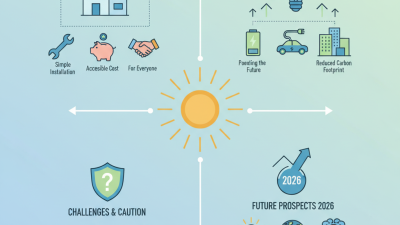
2026 Best Solar Junction Innovations and Technologies for Clean Energy?
The future of clean energy is undeniably linked to advancements in solar junction technologies. According to a report by the International Energy Agency, solar energy accounted for over 10% of global electricity generation in 2022, showcasing its rapid growth. This shift signifies the importance of efficient solar junction systems. These innovations play a crucial role in enhancing solar panel efficiency and reducing costs.
Recent developments reveal that multi-junction solar cells can achieve efficiencies exceeding 40%. This advancement is critical as traditional silicon-based cells plateau around 20%. The evolving landscape of solar junction technologies raises questions about scalability and real-world applications. How can these breakthroughs transition from labs to rooftops?
Despite the promising statistics, challenges remain. Issues like high manufacturing costs and material sustainability must be addressed. Industry experts emphasize the need for a balanced approach. Investing in solar junction technologies is vital, but it requires reflection on environmental impacts and economic viability. Future innovations must lead to reliable solutions that meet rising energy demands while safeguarding our planet.
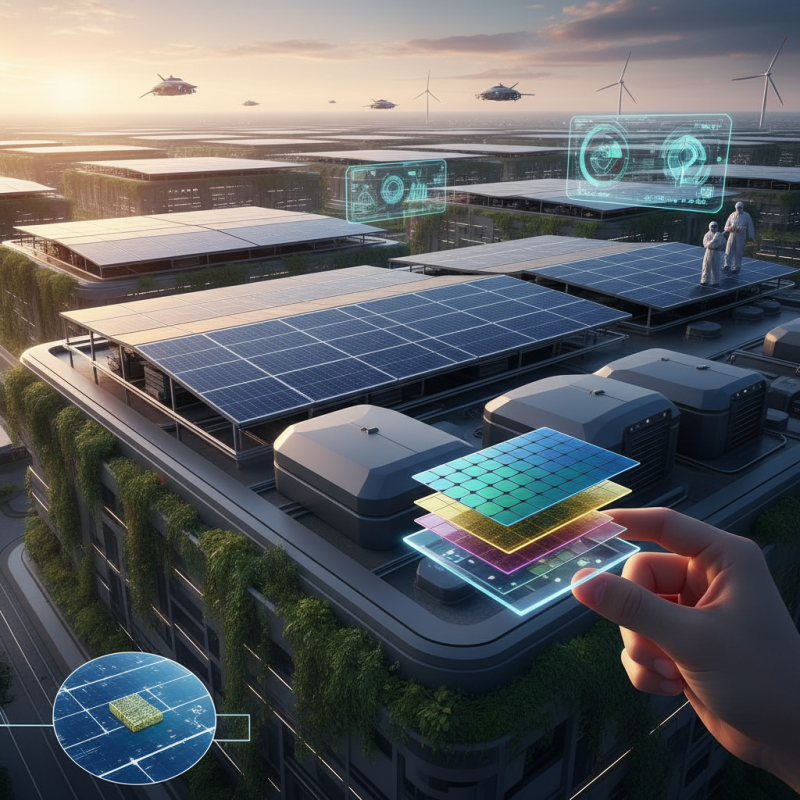
Overview of Solar Junction Technology Evolution and Trends
The evolution of solar junction technologies has gained momentum over the past decade. According to a recent report by the International Renewable Energy Agency, the global photovoltaic (PV) market expanded by 22% in 2022. This growth spurred innovation in solar junction materials and processes. Efficient energy conversion remains a challenge. Presently, most solar cells achieve around 20% efficiency. Researchers are pushing this boundary.
New developments in multi-junction solar cells show promise. These cells can exceed 40% efficiency under concentrated sunlight. This is a significant leap forward, but the cost and manufacturing complexity remain issues. The U.S. Department of Energy reports that while these technologies are advancing, scaling them for mass production is still a hurdle.
Moreover, energy storage integration is another trend gaining traction. Innovations in battery technologies are essential to harness the full potential of solar junction systems. However, many battery solutions are not yet environmentally friendly. This creates a paradox that needs addressing. As advances in solar junction technologies continue, the balance between efficiency, cost, and sustainability must be carefully managed.
Key Innovations in Solar Cell Efficiency for 2026
The year 2026 is set to witness a leap in solar cell efficiency. Researchers are focusing on new materials and designs to enhance power conversion rates. Reports indicate that innovative perovskite cells could achieve efficiencies over 30%. These developments are crucial as the demand for clean energy increases rapidly. However, scaling up these technologies remains a challenge.
One notable trend is the integration of bifacial solar cells. These cells capture sunlight from both sides, improving overall performance. Current data suggests they can boost energy output by 10-20%. This innovation is promising but requires vast horizontal spaces for peak efficiency, leading to site limitations.
Additionally, advancements in transparent solar technology are emerging. They can be integrated into windows and buildings. However, issues like lower efficiency and production costs still need attention. Insight from industry analyses shows a need for further refinement to make these solutions financially viable. The path to optimal solar efficiency is not straightforward, and the road ahead demands both innovation and critical evaluation.
Integration of Advanced Materials in Solar Junction Design
Advanced materials are redefining solar junction design, pushing boundaries of efficiency and performance. Researchers are experimenting with perovskite materials. These flexible, lightweight options promise higher energy conversion rates. They could revolutionize how we harness solar energy.
One intriguing development is tandem solar cells. By layering different materials, they capture more sunlight. This design attempts to maximize efficiency. However, challenges remain in stability and production costs. There's still a long road ahead. Integration of these materials requires precise engineering and reliability. It’s a balancing act between innovation and practicality.
Improving thermal management is another area of exploration. Innovative coatings can enhance heat dissipation, extending the lifespan of solar cells. Yet, the durability of these materials in harsh environments is still in question. Embracing new technologies is essential but also fraught with imperfections. The design process must continually adapt to emerging insights and data.
2026 Best Solar Junction Innovations and Technologies for Clean Energy
| Innovation/Technology |
Description |
Material Used |
Efficiency (%) |
Year of Development |
| Multi-junction Cells |
High efficiency solar cells combining multiple materials to capture a broader spectrum of sunlight. |
Gallium Arsenide, Silicon |
45 |
2026 |
| Bifacial Solar Panels |
Panels that capture sunlight from both sides, increasing energy output. |
Monocrystalline Silicon |
25 |
2025 |
| Perovskite Solar Cells |
Emerging solar technology with high efficiency potential and lower manufacturing costs. |
Perovskite Materials |
30 |
2026 |
| Transparent Solar Panels |
Innovative panels that can be used on windows while generating electricity. |
Organic Photovoltaic Materials |
15 |
2025 |
| Solar Skin Technology |
Customizable solar panel covering that can enhance aesthetics while maintaining performance. |
Silicon Composite |
22 |
2026 |
The Role of Artificial Intelligence in Enhancing Solar Junction Performance
Artificial Intelligence (AI) is transforming the solar energy landscape. It enhances the performance of solar junctions, which are critical for efficient energy conversion. AI algorithms analyze vast data sets, optimizing the design of materials. This optimization can lead to better light absorption and conversion rates. Moreover, AI can identify patterns in energy output, adjusting operations in real-time to maximize efficiency.
However, utilizing AI in this field isn't without its challenges. The data required for training these algorithms must be precise and extensive. Inaccurate data can lead to miscalculations, reducing system performance. Additionally, the complexity of AI models can make them difficult to interpret. Engineers may find it challenging to trust AI-generated solutions without thorough validation.
Yet, the potential benefits are significant. Innovations driven by AI could unlock new solar technologies. These technologies might include more efficient junctions that operate effectively under various environmental conditions. As we explore these advancements, we must remain vigilant about ethical implications and the reliability of AI systems. Balancing innovation and caution will be pivotal in the quest for cleaner energy solutions.
Future Prospects and Challenges for Solar Junction Innovations in Clean Energy
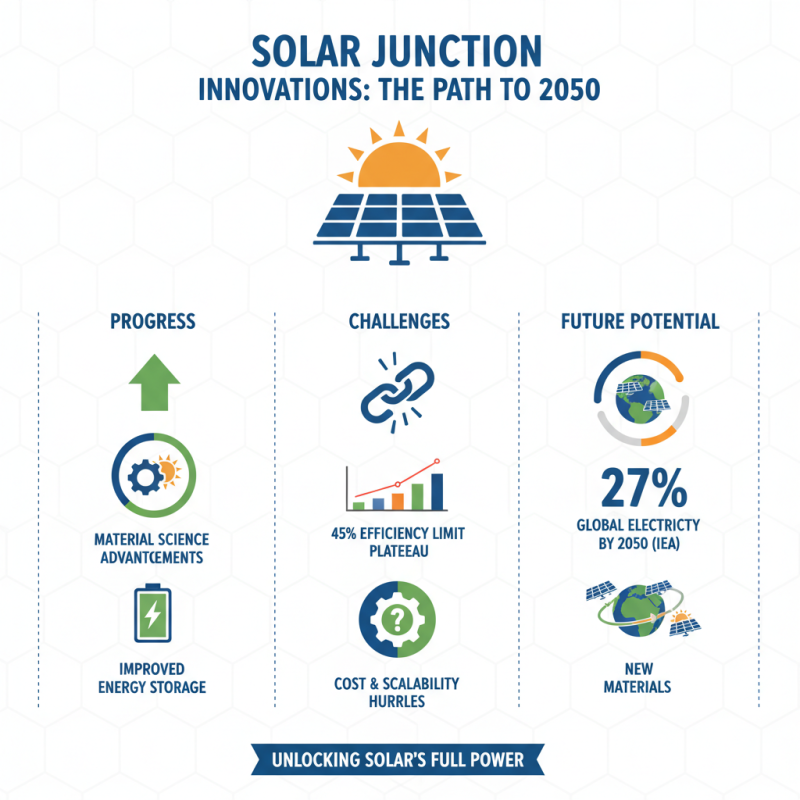
In recent years, solar junction innovations have seen significant progress. However, challenges remain. The International Energy Agency (IEA) reports that solar energy could provide up to 27% of global electricity by 2050. Yet, efficiency is a constant concern. Current technology struggles to exceed 45% efficiency, which limits its expansive potential. Research is ongoing to develop materials that can further enhance performance.
Costs also pose a barrier. Despite falling prices, the initial investment for solar junction technologies can still deter investors. For many, the return on investment isn’t clear-cut. Moreover, integration with existing infrastructure complicates the adoption process. Various studies suggest that scaling up solar energy requires innovative solutions to harness and store energy efficiently.
Environmental impacts introduce another layer of complexity. Manufacturing processes can produce hazardous waste. Additionally, there is a growing debate about land use. Some argue that solar installations consume valuable real estate needed for agriculture. As we move toward 2026, addressing these nuances is crucial for the future of solar energy. The path ahead is riddled with obstacles but holds promise.