2026 How to Choose the Best Solar Wire for Your Energy Needs?
Choosing the right solar wire is crucial for maximizing your energy production. In 2026, the market for solar energy continues to grow. Homeowners and businesses seek efficient options to harness solar power. Selecting appropriate solar wire can be overwhelming. Different types exist, each with unique benefits and challenges.
Solar wire must match your system's voltage and current. You’ll find options like PV wire and USE-2 wire. Both serve distinct purposes and environments. Understanding the differences can help narrow your choices. The wrong wire can lead to energy losses or even hazards.
Consider your project's scale and the installation site. Issues like temperature and exposure may affect performance. Many users overlook these factors, resulting in costly mistakes. Do your research carefully to avoid common pitfalls. Remember, your choice of solar wire impacts your overall energy efficiency. Making an informed decision ensures a reliable solar energy system.
Types of Solar Wire and Their Applications
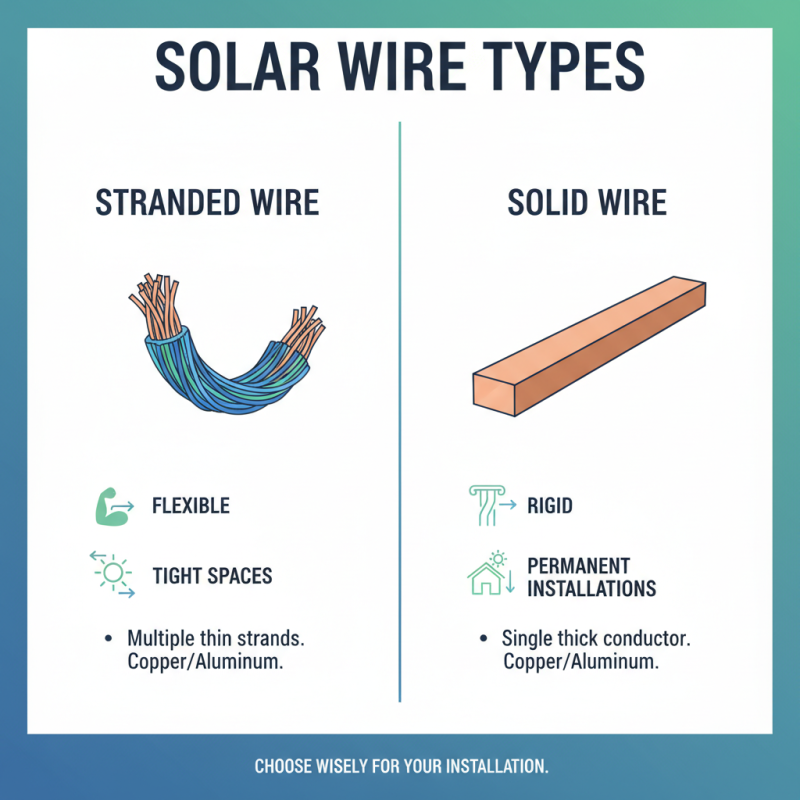
When choosing solar wire, understanding its types is crucial. Solar wires typically fall into two categories: stranded and solid. Stranded wire features multiple small strands of copper or aluminum, making it flexible and ideal for tight spaces. Solid wire, on the other hand, is more rigid and suitable for permanent installations.
Tips: Measure the distance from your solar panels to your inverter. This will help you determine the wire gauge you need. A thicker wire is better for long distances to reduce power loss.
Thermal resistance is another important factor. Some wires can handle higher temperatures better than others. For instance, cross-linked polyethylene (XLPE) wires are known for their heat resistance. Make sure your wire choice meets the temperature ratings for your location.
Tips: Investing in wires with high temperature ratings can prevent future issues. Inspect your wires regularly for wear and tear. This can save you headaches down the line. Choose wisely for efficiency and safety.
Key Factors to Consider When Choosing Solar Wire
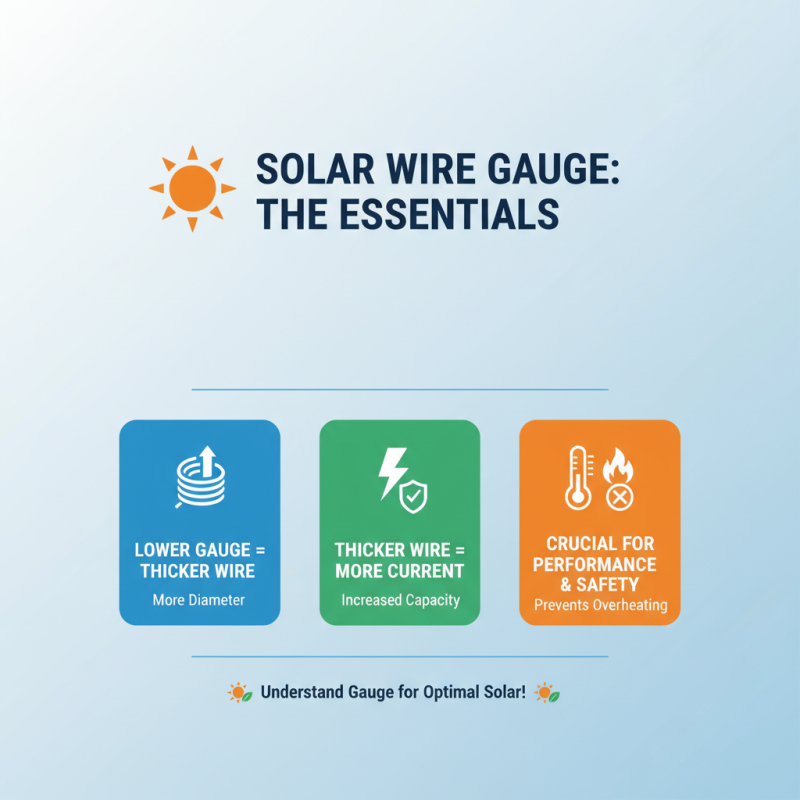
When selecting the best solar wire for your energy needs, several key factors come into play. Start with the wire gauge. Thicker wires can handle more current, reducing voltage drop. A 10 AWG wire, for example, is better than a 12 AWG wire for longer distances. Proper sizing is crucial, but many overlook this aspect.
Next, consider insulation material. Look for wires with UV and heat resistance. Thermoplastic materials might seem adequate, but they wear out faster than cross-linked polyethylene. The choice impacts longevity and safety. Pay attention to environmental ratings as well. Will your installation face moisture? Choose wires designed for wet locations.
Temperature tolerance is another critical point. Some wires perform poorly in extreme heat or cold. If you live in a region with fluctuating temperatures, this factor cannot be ignored. Reflect on installation conditions. Sometimes, the best choice isn’t about specifications but how the wire will be used. Conduct thorough research; purchasing blindly can lead to costly mistakes.
2026 How to Choose the Best Solar Wire for Your Energy Needs? - Key Factors to Consider When Choosing Solar Wire
| Wire Type |
Conductor Material |
AWG Size |
Voltage Rating |
Temperature Rating |
Application Type |
| Photovoltaic (PV) Wire |
Copper |
10 AWG |
600V |
90°C |
Solar Panel Interconnection |
| USE-2 Wire |
Aluminum |
6 AWG |
600V |
90°C |
Underground and Outdoor Connections |
| THWN Wire |
Copper |
8 AWG |
600V |
75°C |
Indoor Installations |
| PVCC Wire |
Copper |
12 AWG |
1000V |
90°C |
Solar Panel Lead Wire |
Environmental Considerations for Solar Wire Selection
When selecting solar wire, environmental impact is a crucial factor. The production of solar wire often involves materials that can harm the ecosystem. For instance, PVC insulation releases harmful chemicals during manufacturing. These emissions can pollute air and water. Choosing wires with low or recyclable materials can reduce this impact.
Another point of consideration is the wire's lifespan. Some wires may degrade faster under UV light. This can lead to frequent replacements. Over time, discarded materials may accumulate in landfills. It raises concerns about sustainability. Opting for UV-resistant wires is a step toward better choices.
We should also evaluate the end-of-life management of solar wires. Some wires can be recycled, while others are not easily disposed of. A wire that is not recyclable adds to waste challenges. It's essential to weigh these factors when making a decision. Our choices now can shape the future of solar energy.
Installation Tips for Optimal Solar Wire Use
When installing solar wire, proper attention to detail can make a big difference. Start by measuring the distance between your solar panels and the inverter. Accurate measurements help you choose the right wire length. Avoid too much slack. Examine your installation site for potential hazards, like sharp edges. The wire should not be in contact with anything that could damage it.
Consider the environment where the wire will be used. If you are in a rainy area, use weather-resistant insulation. In hotter climates, heat might cause wear over time. Seek wires that are rated for extreme temperatures. This helps ensure longevity and efficiency in energy transfer.
Check connections regularly to avoid future problems. Loose connections can increase resistance. This creates heat and can damage your system. Don’t overlook the importance of blackouts too. In emergencies, inspecting the wire and connections becomes crucial. You may want to have tools ready for quick fixes. Even small mistakes can lead to significant issues later. Pay attention for best results.
2026 Energy Needs vs. Solar Wire Types