How to Choose the Best UPVC Ball Valve for Global Sourcing?

Choosing the right Upvc Ball Valve for global sourcing involves more than comparing prices. A valve may look identical in a product photograph, yet its body thickness, sealing performance, and thread accuracy can differ considerably. Procurement teams must examine the intended fluid, operating pressure, temperature range, connection type, and installation environment. A small irrigation line needs different assurance than a chemical dosing system. Details matter.

Michael Chen, an independent UPVC valve sourcing consultant, states, “A reliable valve is proven by its materials, testing records, and performance after installation.” This principle gives buyers a practical starting point. Request material specifications, pressure-test reports, dimensional drawings, and batch traceability before placing a large order. Confirm whether the body uses genuine UPVC resin and whether the seals match the working medium. Ask for samples. Inspect the handle movement, ball alignment, and socket finish by hand.

Supplier communication also deserves attention. Clear documentation reduces costly misunderstandings across languages and time zones. However, no checklist is perfect. Some buyers focus heavily on certifications and overlook packaging damage, storage conditions, or replacement-part availability. That is a mistake.

A dependable sourcing process combines technical review, factory evaluation, sample testing, and realistic cost analysis. Freight, minimum order quantities, lead times, and after-sales support can change the final purchase value. The cheapest Upvc Ball Valve may become expensive after one failed shipment or premature leak. Careful comparison creates stronger supply relationships and more predictable field performance.
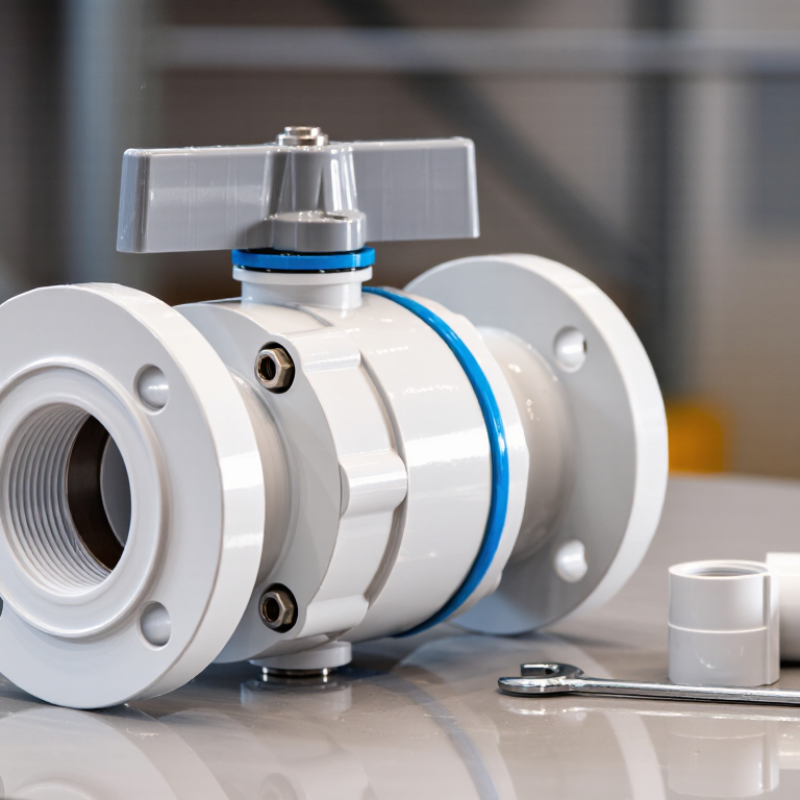
How to Choose the Best UPVC Ball Valve for Global Sourcing?

Understanding UPVC Ball Valve Structure, Materials, and Applications

Choosing the best UPVC ball valve starts with its structure, not its price. A typical valve uses a molded body, a drilled spherical ball, a stem, seats, and elastomer seals. The ball rotates 90 degrees, creating a straight flow path with low resistance. Full-port designs reduce pressure loss, while reduced-port designs save material and space.

Material selection needs evidence. Unplasticized PVC resists corrosion from many acids, alkalis, and salts, but it can become brittle under cold impact or prolonged ultraviolet exposure. ASTM D1784 classifies rigid PVC compounds by mechanical and thermal performance. ISO 16135 covers thermoplastic ball valves for industrial use. Ask suppliers for compound grades, pressure ratings, temperature limits, and batch test records. A certificate alone may not reveal poor molding.

Application details change the right design. In irrigation, threaded connections offer quick installation, but solvent-welded sockets can reduce leakage points. In water treatment, EPDM seals often suit water service, while other media may require different elastomers. Plastics Europe reported that PVC represented about 9.8% of European plastics demand in 2022, showing its continuing infrastructure role. The United Nations World Water Development Report 2024 states that agriculture uses roughly 70% of global freshwater withdrawals. That makes reliable flow control important. Still, I would not trust a valve selected from a catalog image. Wall thickness, stem support, seal compression, and actual operating cycles deserve inspection. Small details matter.

Identifying Pressure, Temperature, Size, and Connection Requirements

When sourcing a UPVC ball valve globally, start with pressure and temperature, not price. Define the working pressure, peak pressure, fluid temperature, and operating cycles.

ISO 5208 and EN 12266-1 provide leakage-testing frameworks, but they do not make every valve suitable for every service. Ask for test certificates, pressure-temperature derating curves, and batch traceability.

A valve rated at 1.6 MPa at room temperature may require a lower rating near its maximum temperature.

This detail is often missed.

Size and connection design can prevent expensive installation errors. Confirm DN or NPS, pipe outside diameter, wall series, and whether the connection is socket, threaded, or flanged.

A DN50 valve may not match a 2-inch pipe system without checking the actual standard. ISO 1452 covers PVC-U piping systems for water supply, while local projects may require different dimensional rules.

For drinking-water applications, request approval evidence such as NSF/ANSI/CAN 61 or the applicable regional standard.

PlasticsEurope reported global plastics production at 400.3 million tonnes in 2022, showing the scale of this supply chain, but scale does not guarantee consistency.

I have seen clean-looking samples fail because thread geometry was wrong. Recheck drawings, sealing materials, actuator clearance, and inspection records before approving a shipment.

Comparing Valve Quality, Standards, and Manufacturer Capabilities

Choosing the best UPVC ball valve for global sourcing requires more than comparing price and appearance. Valve quality starts with the resin, pressure rating, sealing system, and dimensional consistency. Ask for material declarations, batch traceability, and pressure-test records. A reliable valve should open smoothly, seal without visible leakage, and maintain performance after repeated cycles.

Standards must match the application and destination market. Pressure testing may reference ISO 5208, while piping compatibility can involve regional standards such as EN 1452. Potable-water projects may require additional health-effect approvals. Never treat one certificate as universal acceptance. I have seen attractive documents fail to clarify scope, test conditions, or production dates. That gap deserves attention.

Tips: Request production samples from the actual mold. Check socket dimensions with calipers. Ask whether every batch receives shell and seat testing. Review the manufacturer’s inspection plan, laboratory equipment, mold-maintenance records, and corrective-action process. Strong suppliers can explain compound control, temperature limits, torque testing, packaging protection, and export documentation clearly. They should also support independent inspections without resistance. A factory may meet a standard once, yet struggle with stable output. That is why capability matters as much as certification. Pilot orders, recorded test results, and honest discussion of limitations can reveal more than polished marketing material.

How to Choose the Best UPVC Ball Valve for Global Sourcing? - Comparing Valve Quality, Standards, and Manufacturer Capabilities

A practical comparison framework for evaluating UPVC ball valves, technical compliance, quality consistency, and supplier production capability.

Evaluation Dimension Minimum Acceptable Level Preferred Global-Sourcing Benchmark Verification Evidence Sourcing Risk
Valve Body Material Unplasticized PVC suitable for pressure service, with a clearly defined resin or compound specification. Industrial-grade UPVC compound with documented formulation control, UV stabilization where required, and traceable material batches. Material declaration, compound specification, batch records, and third-party or internal laboratory test reports. Medium
Applicable Product Standards The supplier identifies the testing standard used for thermoplastic valves and provides a product-specific test plan. Conformity with ISO 16135 for industrial thermoplastic ball valves, or the applicable regional standard such as EN 13828 for building-service valves. Declaration of conformity, standard edition, test laboratory details, and a clause-by-clause compliance matrix. High
Pressure Rating A published pressure rating at a stated reference temperature, with no unexplained gap between body size ranges. Common industrial UPVC ball valves are often rated around PN10 or PN16 at 20°C, subject to size, design, connection type, and manufacturer derating. Pressure-temperature chart, hydrostatic shell test results, seat test results, and marked pressure class. High
Operating Temperature A defined operating range that includes the actual process temperature and chemical environment. Typically suitable for approximately 0°C to 60°C service, with the exact limit confirmed by the valve design, seals, medium, and pressure derating. Temperature-pressure derating curve, seal material specification, and chemical compatibility chart. Medium
Ball and Stem Design Smooth-flow ball, positive stem retention, and a design that prevents the stem from being ejected under pressure. Blowout-resistant stem, full-port or reduced-port design clearly identified, low operating torque, and reinforced stem interface for frequent cycling. Cross-sectional drawing, torque data, stem-retention test, and cycle-life test report. Medium
Seat and Seal Materials EPDM, FKM, PTFE, or another seal material selected according to the medium and temperature. Replaceable seats and seals, controlled compression, and documented compatibility with water, chemicals, or process fluids. Seal compound identification, compatibility chart, spare-parts list, and leakage test records. High
End Connections The valve uses the required socket, threaded, flanged, or true-union connection standard. Interchangeable dimensions, clearly defined pipe-size system, consistent wall thickness, and compatible union or flange dimensions. Dimensional drawing, tolerance table, connection standard, and sample fit-check with the target pipe system. High
Leakage and Pressure Testing Every production batch receives documented shell and seat leakage testing. 100% functional and leakage testing, calibrated gauges, defined test pressure and duration, and retained inspection records. Inspection and Test Plan, sample test certificate, gauge calibration certificates, and nonconformance records. High
Dimensional Consistency Critical dimensions remain within approved drawing tolerances across production lots. Coordinate measuring equipment, first-article approval, statistical process control for critical dimensions, and controlled tooling maintenance. Inspection reports, gauge list, tooling records, capability studies, and approved golden samples. Medium
Molding and Assembly Capability Stable injection-molding, machining, assembly, and inspection processes for the required valve sizes. In-house or tightly controlled molding and assembly, preventive maintenance, documented work instructions, and trained quality personnel. Process flow chart, equipment list, maintenance plan, operator training records, and production audit results. Medium
Quality Management A documented quality system with inspection records and corrective-action procedures. ISO 9001-based quality management, lot traceability, risk-based inspection, CAPA records, and supplier control for purchased components. Valid certificate, quality manual, internal audit summary, CAPA examples, and traceability demonstration. Medium
Product Identification Permanent or durable marking of size, material, pressure class, flow direction where applicable, and production information. Molded or permanent markings that remain legible after installation, supported by lot or date coding for traceability. Marking drawing, sample photographs, packaging label specification, and traceability procedure. Low
Certifications for Target Market The supplier identifies mandatory approvals for the destination market before production. Market-specific compliance, such as potable-water approval where required, alongside applicable pressure-equipment, chemical, or construction requirements. Certificate scope, certificate validity, model and size coverage, test reports, and certification-body verification. High
Production Capacity The supplier can meet the forecast quantity without outsourcing critical processes without approval. Capacity planning by valve size, documented monthly output, backup tooling, and contingency planning for resin and seal supply. Capacity calculation, machine loading plan, recent delivery performance, and production continuity plan. Medium
Packaging and Export Readiness Packaging protects valve bodies, threaded ends, unions, and sealing surfaces during international transportation. Moisture-resistant export packaging, barcode or lot labels, pallet specifications, multilingual documentation, and drop or compression validation where appropriate. Packaging specification, carton test data, loading photographs, shipping marks, and export document samples. Low
After-Sales and Spare Parts Replacement seats, seals, handles, unions, and installation instructions are available. Defined spare-parts policy, stable product revisions, technical response time, and documented warranty and claim procedures. Spare-parts catalogue, warranty terms, service-level commitment, complaint records, and revision-control procedure. Medium
Technical note: Pressure and temperature values shown above are typical sourcing benchmarks, not universal guarantees. Final acceptance should always be based on the exact valve size, connection design, medium, temperature, pressure-temperature derating curve, applicable regional regulations, and verified manufacturer test documentation.

Evaluating Total Cost, Certifications, Packaging, and Global Logistics

Choosing the best UPVC ball valve for global sourcing starts with total landed cost, not the factory quote. Include tooling, sample testing, inspection, duties, freight, storage, and possible replacement claims. A low unit price can become expensive after port delays or leakage complaints. Compare at least three quotations using the same specifications, pressure rating, connection size, and operating temperature.

Certification must match the destination and application. Ask for current test reports, material declarations, pressure-test records, and traceability documents. For drinking water projects, confirm that the valve and seals meet the required contact-material standards. For regulated markets, verify applicable conformity documents instead of accepting a generic certificate. I have seen certificates covering a factory, but not the exact valve material. That gap matters.

Packaging protects both quality and cash flow. Each valve should have a clean protective bag, clear size labeling, and strong cartons with quantity marks. Pallets need moisture protection during ocean transport. Confirm carton dimensions before booking space; small errors can increase freight charges. Discuss Incoterms, production lead time, port congestion, and customs documents early. A pre-shipment inspection can check dimensions, threads, handle movement, and pressure performance. It cannot reveal every future failure. My own purchasing reviews sometimes overvalue paperwork and undervalue field conditions. Hard water, repeated cycling, and rough installation may expose weaknesses that laboratory samples miss.

How to Choose the Best UPVC Ball Valve for Global Sourcing?

Typical landed-cost comparison by valve size for a 1,000-unit international order

The model combines indicative ex-works pricing, certification allocation, export packaging, ocean freight and destination handling. Larger valves typically increase material, packaging and freight costs. Certification costs are allocated per unit and should be verified against the destination market’s requirements, such as potable-water, pressure, chemical-resistance or quality-management standards.

Verifying Suppliers Through Samples, Testing, and Long-Term Support

When sourcing UPVC ball valves globally, a supplier’s sample tells more than a polished catalog. In my inspections, I ask for valves from the same production line planned for bulk orders. I record body weight, socket dimensions, handle movement, and thread accuracy. Small differences matter. A sample that feels stiff may indicate poor alignment or weak molding control. I also request material declarations and batch traceability documents. These records do not replace testing, but they expose gaps early. This process is practical, not glamorous.

The sample should undergo pressure, leakage, torque, and cycle testing under specified conditions. Use an independent laboratory when the application is critical or claims seem vague. Check whether the test medium, pressure, temperature, and duration match your actual service environment. A valve passing a short test may still fail after repeated operation. I have seen procurement teams approve attractive samples, then discover inconsistent seals in the second shipment. That mistake is expensive. Test several units, not one.

Variation is evidence.

Long-term support deserves equal attention. Ask how the supplier handles replacement seals, technical questions, corrective actions, and delayed deliveries. Get response times in writing. A reliable supplier shares inspection data instead of hiding behind general promises. Still, no supplier is perfect. Your own incoming inspection remains necessary. Review performance after three, six, and twelve months, then adjust specifications when field evidence disagrees with assumptions. The best decision is rarely the cheapest quotation; it is the option that remains verifiable when conditions change.