China Top 10 Solar Junction Box Manufacturers
China’s solar manufacturing sector has become a major source of photovoltaic components, including the solar junction box. This small enclosure protects electrical connections behind a module. It also manages heat, moisture, current, and long-term mechanical stress.
A weak junction box can damage an otherwise efficient panel. That risk deserves careful attention. Dr. Dirk Jordan, a photovoltaic reliability researcher at the National Renewable Energy Laboratory, emphasizes: “Reliability must be evaluated over time, not judged from a single test.” This principle guides our review of China’s top 10 solar junction box manufacturers.
The comparison considers more than factory size. We examine product design, diode performance, sealing quality, connector compatibility, traceable testing, and manufacturing experience. Relevant standards include IEC 62790, IEC 61730, and applicable UL requirements. Certifications matter, but they do not tell the entire story. Field records, quality controls, and technical support also influence buyer confidence.
Details reveal practical differences. Look for stable silicone seals, secure cable exits, low contact resistance, and housings that resist ultraviolet exposure. A junction box should remain dependable under rooftop heat and sudden temperature changes. Not every advertised feature proves real-world durability. That is where this ranking becomes imperfect, and readers should verify current certificates and test reports before purchasing.
This guide is designed for module manufacturers, distributors, installers, and project developers. It highlights established suppliers while acknowledging that regional service, customization, and delivery capacity may change. Careful comparison remains essential. Small components can create large consequences.
China’s PV Junction Box Industry: 216.88 GW Added in China in 2023
China Top 10 Solar Junction Box Manufacturers
China added 216.88 GW of photovoltaic capacity in 2023, according to official energy statistics. That scale matters. Every new module requires a junction box that manages current, protects connections, and supports long-term field operation. The rapid installation pace increased demand for stable supply, consistent testing, and faster technical coordination between module factories and component producers.
A dependable junction box needs more than a strong enclosure. Engineers examine diode performance, connector compatibility, sealing quality, thermal behavior, and resistance to ultraviolet exposure. In coastal projects, salt mist protection becomes important. In desert regions, dust and sharp temperature changes can stress seals and cable entries. Details decide reliability. Production audits should review material certificates, traceability records, sampling plans, and electrical safety tests. These checks often reveal problems before modules reach a project site.
However, 216.88 GW of added capacity does not equal exact junction box shipments. Some projects may use spare parts, replacements, or different module designs. This distinction deserves attention when comparing China’s top manufacturers. Buyers should evaluate verified test data, response speed, customization capability, and documented field experience rather than capacity claims alone. A low unit price can look attractive, but weak sealing or inconsistent diode quality may increase maintenance costs. The industry is expanding quickly, yet quality control must keep pace. That remains an unfinished task.
China Top 10 Solar Junction Box Manufacturers
China’s rapidly expanding photovoltaic market has increased demand for reliable solar junction boxes and other module-level components. The chart below shows China’s annual newly added solar PV capacity from 2019 to 2023, providing industry context without displaying company or brand data.
In 2023, China added 216.88 GW of solar PV capacity, the highest annual addition recorded during this period. Source: National Energy Administration of China.
Evaluation Framework: IEC 62790, 25 A Ratings, and Thermal Testing
When comparing China’s solar junction box manufacturers, use IEC 62790 as a practical starting point. Request test reports that identify the exact product model and cover relevant electrical, mechanical, and environmental checks. A certificate alone may not show how a box performs in a specific module design. Check that the stated 25 A rating matches the intended operating conditions, cable size, and connector configuration. Ratings need context.
Tips: Ask for the test temperature, current, and duration. Look for clear sample identification. Confirm that the tested design matches the production unit, not just a similar prototype.
Thermal testing deserves close attention. Under sustained current, measure temperature rise at terminals and cable connections, where resistance can create local hot spots. Review results against the manufacturer’s stated operating limits, and ask how tests account for sunlight exposure and enclosure heating. Repeatable methods matter more than a single impressive number. A clean lab result is useful, but it does not capture every installation. I would also check assembly consistency across several samples; this step is easy to overlook. Compare the evidence, not just the headline rating, before shortlisting suppliers.
China’s Top 10 Solar Junction Box Manufacturers: Products and Certifications
China’s Top 10 Solar Junction Box Manufacturers: Products and Certifications
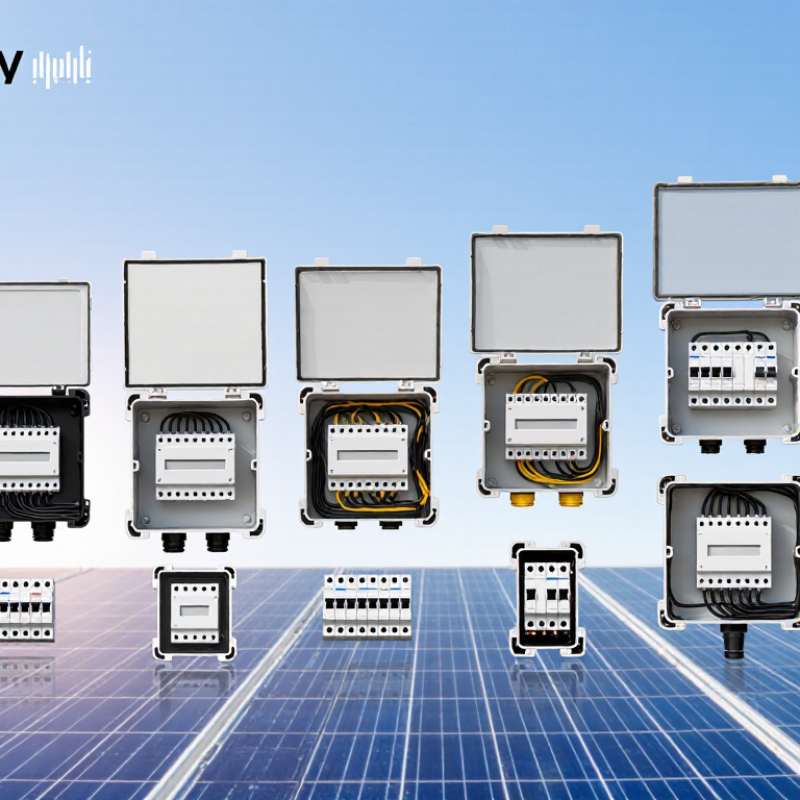
China’s leading solar junction box manufacturers supply products for residential, commercial, and utility-scale modules. Common designs include three-diode, four-diode, and six-diode junction boxes. Some models use IP68-rated housings, tinned copper cables, and pre-assembled connectors. These details support safer current transfer in heat, moisture, and outdoor exposure. Product quality still varies between factories.
For professional evaluation, check compliance with IEC 62790 for photovoltaic module junction boxes. Connector systems may also require IEC 62852 testing. Depending on the target market, buyers may request UL recognition, TÜV testing, CE documentation, or RoHS declarations. ISO 9001 can show controlled production processes, but it does not prove every product performs well. Certification scope matters. A certificate for one model cannot automatically cover another model.
Tips: Ask for the exact certificate number, tested model, current rating, and expiry status. Review thermal cycling, humidity-freeze, insulation, and pull-force test results. Factory audits can reveal weak soldering, uneven potting, or poor cable storage. Do not rely only on a polished catalog. In practice, even a certified design may need retesting after material changes. That uncomfortable detail is often overlooked.
China’s Top 10 Solar Junction Box Manufacturers: Products and Certifications
Standards-based reference only: no manufacturers are named or ranked, and the entries below describe relevant product standards and conformity schemes—not certifications held by any particular company. Verify the current certificate, product model, issuing body, and market scope with the supplier.
| Reference Item |
Product or Compliance Area |
Relevant Standard or Regulation |
What It Covers |
Verification Point |
| 1 |
Photovoltaic module junction boxes |
IEC 62790 |
Safety requirements and tests for junction boxes used with photovoltaic modules. |
Check that the certificate or test report identifies the exact junction-box model and applicable edition. |
| 2 |
Photovoltaic DC connectors |
IEC 62852 |
Safety requirements and tests for connectors intended for DC use in photovoltaic systems. |
Confirm connector type and compatibility; do not assume different connector designs are interchangeable. |
| 3 |
Photovoltaic junction boxes for the North American market |
UL 3730 |
UL safety requirements for photovoltaic junction boxes. |
Check the listing details, model number, and certification directory for the relevant market. |
| 4 |
Photovoltaic connectors for the North American market |
UL 6703 |
Safety requirements for connectors used in photovoltaic systems. |
Verify the connector models and any stated mating-connector conditions in the listing. |
| 5 |
Photovoltaic module safety |
IEC 61730 |
Safety qualification requirements for photovoltaic modules; it is not, by itself, a junction-box-only certification. |
Confirm whether evidence applies to the complete module assembly and the specific module model. |
| 6 |
Photovoltaic module design qualification |
IEC 61215 |
Design qualification and type approval tests for terrestrial photovoltaic modules; it does not independently certify a loose junction box. |
Check the tested module construction and whether the junction box is included in that construction. |
| 7 |
Photovoltaic fuse-links, where fitted |
IEC 60269-6 |
Supplementary requirements for fuse-links used to protect photovoltaic energy systems. |
Confirm the fuse rating and the exact fuse model; this standard is relevant only when fuses are included. |
| 8 |
Ingress protection claims |
IEC 60529 |
Classification of enclosure protection against access, solid objects, and water ingress, expressed as an IP code. |
Check the tested enclosure configuration and conditions; an IP rating is not a complete product safety approval. |
| 9 |
Quality management system |
ISO 9001 |
Requirements for an organization’s quality management system, not a product performance or safety certification. |
Verify the certificate’s organization, site, scope, validity period, and accredited certification body. |
| 10 |
Restricted substances and European market access |
EU RoHS Directive 2011/65/EU; CE marking where applicable |
RoHS restricts specified hazardous substances in covered electrical and electronic equipment. CE marking indicates the manufacturer’s declaration of conformity with applicable EU legislation; it is not a standalone third-party certification. |
Request the applicable EU Declaration of Conformity and supporting substance-compliance documentation for the product. |
Top-10 Comparison: Module Compatibility, Automation, Exports, and Warranty Data
A useful comparison of China’s top 10 solar junction box manufacturers should start with module compatibility. Check supported cell layouts, cable lengths, connector options, and rated current against the module design. A box that fits one panel may not suit another. Ask for drawings and test records, not just a compatibility claim.
Automation matters, but it is not a quality score by itself. Compare production lines by soldering controls, inspection coverage, and traceability for each batch. Ask whether checks include diode performance and sealing integrity. Small details count. Export experience can indicate familiarity with packing, documentation, and overseas service, but shipment volume alone proves little. Request destination-market references where available, while treating supplier-provided figures as claims to verify.
Warranty data also needs context. Compare coverage periods, exclusions, claim procedures, and the availability of replacement parts. A long warranty sounds reassuring. Yet unclear terms can make it hard to use. For a fair top-10 comparison, place each manufacturer’s evidence side by side and mark missing data plainly. Some figures may remain difficult to confirm; that weakness belongs in the assessment, not hidden in a footnote.