Choosing reliable solar equipment should feel practical, not confusing. This guide explores top easy solar products for global buyers, from portable panels to small backup kits. These products can support camping, remote work, emergency lighting, and everyday energy savings. Their value depends on real conditions, including sunlight, storage space, transport, and local power systems.
Fit comes first. A foldable panel may charge phones efficiently, but it may not support a refrigerator overnight. Small steps matter. Buyers should compare wattage, battery capacity, charging speed, connector types, weather resistance, and replacement options. Products with clear manuals, tested components, and transparent warranty terms usually offer safer purchasing decisions. Look for relevant quality marks and verify whether certifications match the destination market. Requirements can vary between regions.
This overview also considers how easy solar products perform outside product photos. A compact lantern should provide stable light, not merely impressive brightness for a few minutes. A portable power station should include suitable protection systems and realistic capacity information. Some advertised results assume perfect sunlight, which rarely exists. That detail deserves more attention. No product is perfect, and a lower-cost kit may create higher expenses when accessories fail early. Experienced buyers often calculate total ownership costs before ordering, including shipping, adapters, maintenance, and battery replacement. The goal is not to promote one universal solution. It is to help global buyers choose dependable equipment with clearer expectations, stronger evidence, and fewer unpleasant surprises.
An easy solar product should work with local conditions, not only look simple online. Buyers need clear power ratings, compatible plugs, and instructions written in understandable language. A small solar lamp may be convenient in a sunny region, but cloudy weather can reduce its daily output. Good products explain this limitation honestly.
Practical usability also depends on setup. A buyer should identify the panel, connect the cable, and check the charging status without special training. Tool-free mounting helps, especially for renters or remote households. Strong weather resistance matters in coastal, humid, or dusty areas. Safety information should cover battery storage, charging temperatures, and disposal requirements. Local certification and electrical standards must also be verified before purchase.
Reliable sellers provide testing data, warranty terms, replacement parts, and responsive support across time zones. Multilingual manuals are useful, but poor translations can still create confusion. App-based controls may offer convenience, yet pairing can fail when internet access is limited. This is an overlooked weakness. A product with manual controls may serve more users.
Global buyers should compare real operating conditions, not only advertised wattage. Measure available sunlight, installation space, transport needs, and local service options. Easy use is not effortless use. It means fewer surprises, clearer decisions, and safer daily operation.
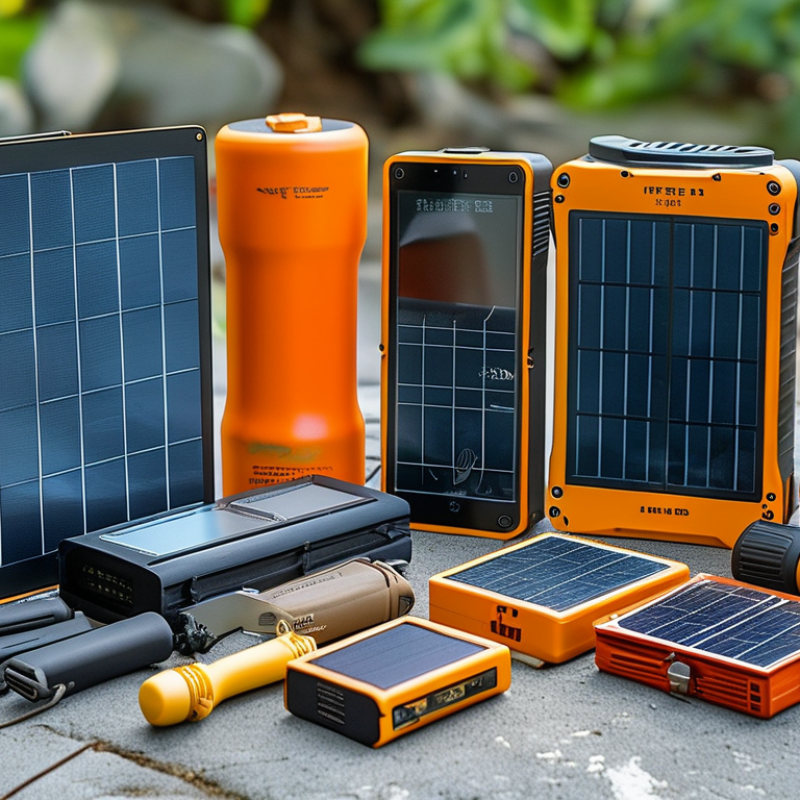
Simple solar products are expanding beyond emergency lighting. The World Bank’s Tracking SDG 7 report states that about 685 million people lacked electricity access in 2022. For these households, solar lanterns, phone-charging kits, and small home systems provide immediate, practical energy. A lantern suits evening study or market work. A charging kit supports phones, radios, and basic communication. Small solar home systems can power lights, fans, and small televisions.
Solar water pumps serve farms and remote villages. Solar streetlights improve visibility around schools, pathways, and community spaces. Portable solar panels support camping, fieldwork, and disaster response. The IEA’s Renewables 2024 report recorded roughly 510 gigawatts of new renewable capacity in 2023, with solar providing about three-quarters of that growth. This shows strong market momentum, but simple products still need careful selection. A low price can hide weak batteries, poor weather sealing, or difficult repairs. That part is often overlooked.
Tips: Check daily sunlight, battery capacity, warranty terms, spare parts, and local service skills. Match the product to real loads, not imagined ones. A phone charger cannot replace a household system. Look for safety testing and clear technical instructions. Buyers should also compare lumen output, charging time, and battery replacement costs. Standards help, but field performance can still vary. I have found that the simplest design is not always the easiest to maintain.
| Product Type | Typical Solar Input | Typical Battery or Output | Main Applications | Key Advantages | Important Buyer Considerations |
|---|---|---|---|---|---|
| Solar Lantern | Approximately 1–5 W integrated or external solar panel | LED lighting; commonly 1–10 W output with a rechargeable battery | Room lighting, camping, emergency lighting, outdoor activities and temporary power outages | Compact, easy to operate, portable and suitable for basic lighting needs | Check battery chemistry, lighting duration, charging time, weather resistance and lumen output |
| Solar Home Lighting Kit | Usually 5–50 W photovoltaic panel | Typically 10–100 Wh battery capacity; LED lamps often provide 3–10 W each | Basic household lighting, phone charging, small radios and low-power devices in areas with limited grid access | Provides several lights from one system and can improve household energy access | Review the number of lamps, cable length, battery replacement options, safety certification and after-sales support |
| Portable Solar Panel | Commonly 20–200 W rated power | DC output, USB output or connection to a portable power station | Camping, travel, field work, outdoor events, emergency charging and remote equipment | Foldable models are lightweight and can be deployed without permanent installation | Compare rated power, folded size, connector compatibility, operating temperature and performance in partial shade |
| Solar Power Bank | Small integrated panel, generally about 0.5–2 W | Usually 5,000–20,000 mAh battery capacity; USB output commonly 5 V | Emergency phone charging, travel, hiking and backup power for small USB devices | Portable and convenient for short-term backup charging | The built-in panel is slow for full charging; verify USB power, battery capacity, water resistance and thermal protection |
| Solar Street Light | Typically 20–200 W LED system rating, with a separate photovoltaic panel | Rechargeable battery commonly sized for one or more nights of lighting | Roads, pathways, parking areas, courtyards, public spaces and security lighting | No trenching for grid power cables and automatic dusk-to-dawn operation | Evaluate illuminance, pole height, battery autonomy, panel orientation, wind loading and local installation standards |
| Solar Floodlight | Approximately 10–100 W LED system rating | Integrated rechargeable battery; many models include motion or light sensors | Gardens, driveways, building exteriors, farms, warehouses and security zones | Simple installation, automatic operation and useful coverage for outdoor areas | Check IP rating, sensor range, mounting options, battery capacity and actual lighting duration |
| Solar Water Pump | Commonly 50–1,000 W photovoltaic array, depending on pump size | Direct solar operation or battery-supported operation; pump flow often ranges from small household volumes to agricultural use | Livestock watering, garden irrigation, domestic water transfer and remote water supply | Can operate away from the electricity grid and may reduce fuel use for small pumping tasks | Match pump head, flow rate, water quality, pipe size, dry-run protection and daily solar resource |
| Solar Ventilation Fan | Usually 5–50 W photovoltaic panel | Direct DC operation or small battery backup; airflow varies by fan size | Greenhouses, sheds, attics, livestock shelters, boats and vehicle interiors | Simple ventilation without regular grid electricity consumption | Consider airflow rate, noise level, installation location, moisture protection and whether night operation is required |
| Solar Cooker or Solar Oven | Uses direct solar radiation rather than a fixed electrical wattage | Cooking temperature and time depend on design, sunlight, food quantity and ambient conditions | Outdoor cooking, emergency preparedness, demonstrations and fuel-saving household applications | Can reduce the need for wood, charcoal or gas during suitable daylight conditions | Check cooking capacity, heat retention, user safety, wind resistance and performance in local weather conditions |
Note: Specifications are typical market ranges for general comparison. Actual performance depends on solar irradiance, temperature, installation angle, battery condition, load profile and local operating conditions.
Solar performance should be judged beyond the headline wattage. Check rated output under standard test conditions, then compare it with real sunlight, heat, dust, and partial shade. A useful product should include a clear temperature coefficient and expected energy yield. MPPT control can improve charging when sunlight changes. I have found that simple output records are often more revealing than impressive efficiency claims. Small errors matter.
Quality appears in the details. Examine the panel frame, cable insulation, connectors, and sealing around the enclosure. Look for independent test reports, traceable production information, and a warranty with practical terms. For portable systems, check battery capacity in watt-hours, not only marketing labels. A lightweight unit may be convenient, but its internal components can be difficult to assess. I would not trust a product based on appearance alone.
Safety deserves close attention during every purchase. Confirm protection against overcurrent, reverse polarity, overheating, and short circuits. Battery systems should include a reliable management system and clear charging limits. Outdoor products need suitable ingress protection for rain and dust. Verify voltage, frequency, plugs, grounding, and installation requirements for the destination country. Local electrical rules still apply. One uncomfortable lesson is that low price can hide missing documentation. Even certified products require careful installation, regular inspection, and realistic expectations about cloudy weather.
Solar products work best when they match local weather, housing design, and daily energy needs. In hot, sunny regions, compact solar lights, phone chargers, and small backup panels are practical. Choose heat-resistant materials and allow airflow around the panel. Dust can reduce output quickly, so cleaning access matters.
Cloudy or cold climates need different thinking. Larger panels, efficient batteries, and flexible mounting can help during weak sunlight. Snow may cover panels, while heavy rain demands sealed connectors and sturdy frames. Coastal homes should consider corrosion-resistant hardware. Apartments may benefit from portable lighting or balcony-sized systems, but local electrical rules must be checked before connecting equipment.
Tips: Measure sunlight across the day, not just at noon. Check roof direction, shade, battery capacity, and replacement costs. Confirm product safety documentation and installation requirements. A cheaper kit may become expensive if its battery fails early. I would not trust impressive power claims without testing conditions. Local installers can identify wiring risks and weather concerns that online listings often miss. Start small, record performance, and adjust your setup. Perfect planning is rare.
Buying, Installing, and Maintaining Solar Products Internationally
Global solar demand is rising, but the right product depends on location, climate, and household needs. The IEA PVPS Trends 2024 report recorded more than 1.6 terawatts of global photovoltaic capacity by the end of 2023. That growth creates wider choice, not automatic quality. Buyers should check voltage ratings, plug standards, warranty coverage, and replacement-part availability before ordering.
Installation requires local judgment. A balcony panel may need safe anchoring against strong coastal winds, while a rural system may need protection from dust and rodents. Confirm sunlight exposure across different seasons, not only during a bright afternoon. Certified electricians should inspect wiring, grounding, battery ventilation, and overload protection. IRENA’s Renewable Power Generation Costs in 2023 reported a global weighted average solar PV electricity cost of about 4.4 US cents per kilowatt-hour. However, shipping, taxes, labor, and storage can change the real project cost significantly.
Maintenance is often underestimated. Keep panels clear of leaves, salt, and heavy dust, but avoid abrasive cleaning tools. Check cables for cracking after extreme heat or storms. Battery systems deserve closer monitoring because poor ventilation can shorten service life. The IEA notes that solar manufacturing and deployment are expanding rapidly, yet supply chains remain exposed to price and logistics changes. My own practical concern is simple: product specifications are sometimes clearer than after-sales support. Buyers should record serial numbers, installation dates, and performance readings. Small records prevent large arguments.
Buying, Installing, and Maintaining Solar Products Internationally
This comparison uses representative, non-branded product ratings commonly available in international markets. Estimated daily energy is calculated as rated power × 4 peak sun hours × 80% net system efficiency. Buyers should verify local solar conditions, electrical standards, spare-part availability, installation requirements, and cleaning access before purchase.