Top Types of Solar Plants for Sustainable Energy Solutions?
As the world shifts towards sustainable energy solutions, solar plants play a pivotal role. According to Dr. Emily Hart, a leading expert in renewable energy, "Investing in solar plants is investing in a brighter future." This sentiment resonates as more countries adopt solar technology.
Solar plants come in various types, each with unique benefits. Utility-scale plants generate significant power, while rooftop installations support local energy needs. Yet, choosing the right type can be challenging. Some communities may struggle to implement these technologies effectively. The upfront costs can be a barrier.
Despite the challenges, the potential of solar plants is immense. Innovations continue to emerge, making these systems more efficient and accessible. However, much work remains. Awareness and education about solar technologies can help overcome obstacles. Everyone can contribute to a sustainable energy future.
Overview of Solar Energy and Its Importance in Sustainable Solutions
Solar energy is a cornerstone of sustainable solutions. It can drastically reduce greenhouse gas emissions. According to the International Renewable Energy Agency (IRENA), solar energy could supply over 20% of the world’s electricity by 2040. This shift is vital for combating climate change and ensuring energy security.
The importance of solar energy lies in its accessibility. Solar panels can be installed on rooftops or in large fields. This decentralized approach reduces transmission losses. Moreover, solar technology has become more affordable, with costs dropping by about 80% in the last decade. However, there are still challenges. Energy storage and production consistency remain areas for improvement.
Tips for maximizing solar benefits: Start by assessing your location's sunlight exposure. Analyze your energy needs carefully. Participation in community solar projects might also help those with limited space. Always consider local regulations when planning solar installations, as policies can vary widely.
Investing in solar energy not only contributes to reducing dependency on fossil fuels but also creates a more resilient energy grid. The potential for job creation in this sector is significant, yet training and education need further development to meet this demand. Balancing growth with sustainability poses a challenging question for policymakers and society alike.
Top Types of Solar Plants for Sustainable Energy Solutions
This chart illustrates the distribution of different types of solar plants contributing to sustainable energy solutions. The data represents the estimated global capacity (in GW) of each solar technology type:
Types of Solar Power Plants: An Introduction to Various Technologies
Solar power plays a crucial role in sustainable energy solutions. Different types of solar power plants cater to various needs and environments. Utility-scale solar farms generate massive amounts of energy. They often occupy large areas, utilizing photovoltaic (PV) panels or concentrated solar power (CSP) systems. PV panels convert sunlight directly into electricity. CSP plants, however, use mirrors to focus sunlight, generating heat to drive turbines.
Another type is rooftop solar installations. These smaller systems are more common in urban areas. Homeowners and businesses use them to reduce energy costs. They can significantly lower carbon footprints, but they require sunny locations. Additionally, community solar projects allow multiple users to benefit from a single solar array. This model encourages shared investment and broader access to renewable energy. However, local regulations can complicate these initiatives.
While solar technology is evolving, challenges remain. Variability in sunlight can affect energy production. Storage solutions, like batteries, are not always reliable or affordable. Community engagement is essential for large projects, yet some resist change. Continuing innovation in solar energy will help address these concerns, paving the way for a more sustainable future.
Photovoltaic Solar Plants: Principles and Applications
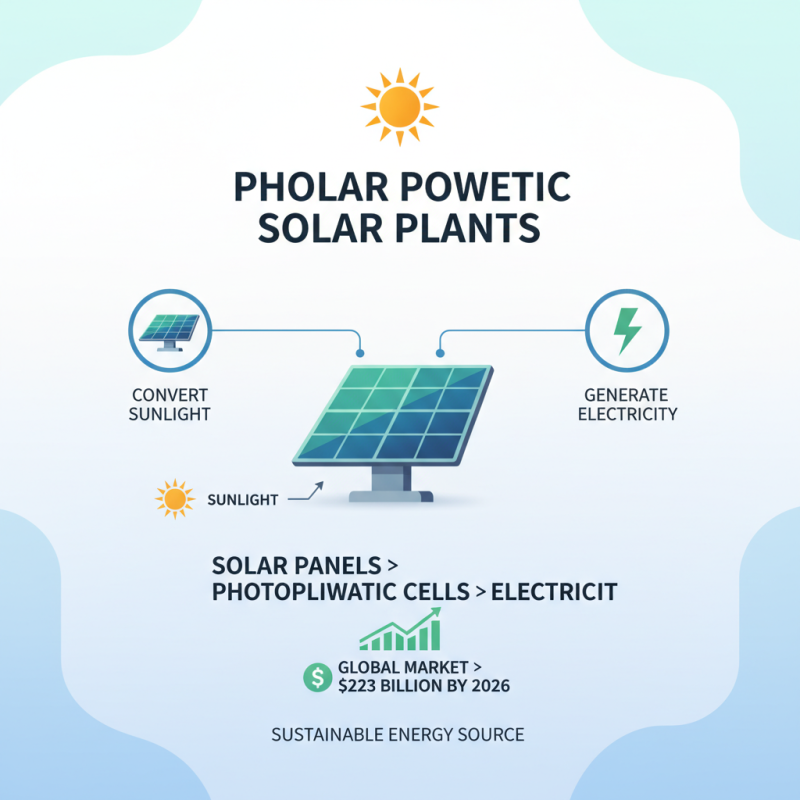
Photovoltaic solar plants utilize sunlight to generate electricity. They convert solar energy directly into electrical energy through solar panels. These panels contain photovoltaic cells, which produce electricity when exposed to sunlight. According to recent industry reports, the global solar energy market is expected to reach over $223 billion by 2026, highlighting the increasing reliance on this sustainable energy source.
Photovoltaic plants vary in scale. Utility-scale plants provide large amounts of energy to the grid. Smaller installations can power homes or businesses. Notably, rooftop solar systems have gained popularity, with a reported 30% increase in installations last year alone. However, reliance on solar energy isn't without challenges. Factors such as regional weather patterns and storage solutions can impact efficiency. Many installations also require significant upfront investments, which may not be feasible for all consumers.
Additionally, the environmental impact must be considered. The production of solar panels involves resource extraction that may harm ecosystems. Although renewable, the full lifecycle of photovoltaic technology raises questions. Balancing efficiency, cost, and environmental impact remains a critical issue for future development. Making informed decisions on solar energy adoption is vital for sustainable growth.
Concentrated Solar Power (CSP) Plants: Working Mechanism and Benefits
Concentrated Solar Power (CSP) plants use mirrors or lenses to focus sunlight. This concentrated light generates heat, often used to produce steam. The steam drives a turbine connected to a generator, producing electricity. Such a system offers a reliable energy source, even when the sun sets.
One major benefit of CSP plants is energy storage. They can store thermal energy. This stored energy can be released when needed, ensuring a steady power supply. However, CSP plants require significant space and are most effective in sunny regions. Not every area has suitable sunlight or land.
Environmental concerns arise too. Building large facilities can disrupt local ecosystems. Water usage for cooling is another concern, especially in arid areas. It's important to weigh these factors when considering CSP solutions for the future. The technology holds promise, but its implementation must be mindful of surrounding environments.
Hybrid Solar Systems: Integrating Solar with Other Renewable Energies
Hybrid solar systems combine solar energy with other renewable sources for a more efficient energy solution. These systems can integrate wind, biomass, or hydroelectric power. According to the International Renewable Energy Agency (IRENA), hybrid systems can increase overall energy efficiency by 20-30%. They take advantage of the complementary nature of these energy sources.
Hybrid systems face challenges. Weather variability can influence performance. For instance, solar energy might be less effective during cloudy days, while wind may not always be available. This can lead to reliability issues. A study showed that these systems must be carefully designed to balance the energy flow. Consider real-time data monitoring to optimize performance.
Additionally, investment costs can be high. Initial installation may deter potential users. However, reduced operational costs over time can make up for this. Long-term savings can be substantial. As reported by the Global Energy Market Outlook, the trend is growing. Over 40% of new renewable energy investments in 2022 included hybrid systems. Adjustments and innovations in technology may resolve some existing flaws and improve reliability.
Top Types of Solar Plants for Sustainable Energy Solutions
| Type of Solar Plant |
Key Features |
Integration with Other Renewables |
Benefits |
| Photovoltaic (PV) Solar Plant |
Converts sunlight directly into electricity using solar panels. |
Can be combined with wind energy systems for consistent energy supply. |
High efficiency, low maintenance costs, and reliable energy production. |
| Concentrated Solar Power (CSP) |
Uses mirrors or lenses to focus sunlight onto a small area to generate heat. |
Often paired with geothermal or biomass heating systems. |
Can store energy for later use, reducing dependence on fossil fuels. |
| Hybrid Solar Systems |
Combines solar energy with other renewable resources such as wind or hydro. |
Maximizes the efficiency of energy production through complementary systems. |
Stability in energy supply, reduced emissions, and higher energy diversification. |
| Building-Integrated Photovoltaics (BIPV) |
Integrates solar panels within building materials like windows or roofs. |
Can work in conjunction with green roofs or rainwater harvesting systems. |
Aesthetic appeal, energy-efficient building design, and land-use optimization. |