The global solar market is entering 2026 with stronger demand, sharper competition, and higher expectations from buyers. Solar projects are no longer judged only by panel price. Buyers now examine module durability, supply reliability, storage compatibility, grid access, financing risk, and long-term service support.
Fatih Birol, Executive Director of the International Energy Agency, has stated, “Solar PV is now the cheapest source of electricity in history.” His observation captures the industry’s economic momentum, but price alone cannot guarantee project success. A low-cost module may create hidden problems if its performance data is unclear, its warranty is difficult to enforce, or replacement parts are unavailable. Details matter. A shipment delayed at a crowded port can affect an entire construction schedule.
This guide explores the major solar industry trends shaping global purchasing decisions in 2026. It examines the growing connection between solar power and battery storage, the expansion of distributed generation, improvements in power electronics, and the rising importance of traceable supply chains. It also considers how buyers can compare technology claims with verified performance data and realistic operating conditions.
Some forecasts will prove wrong.
That is normal in a fast-changing market.
Policy changes, interest rates, grid congestion, and raw-material costs can quickly alter project economics. Experienced buyers therefore need more than optimistic forecasts. They need practical evidence, transparent contracts, credible suppliers, and independent technical review. The strongest opportunities may belong to companies that balance innovation with caution, rather than chasing every new product announcement.
Global solar markets are entering 2026 with stronger demand, but uneven execution. The International Energy Agency’s Renewables 2024 report expects renewable capacity to grow by almost 5,500 GW from 2024 to 2030. Solar and wind will provide about 95% of that expansion. For global buyers, this means more module availability, but also greater pressure on grid connections, land, and qualified installers.
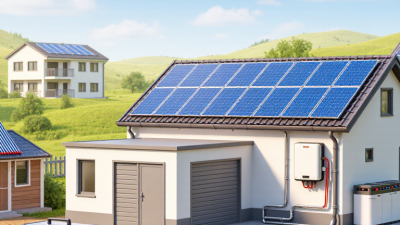
The International Renewable Energy Agency reported that solar capacity reached approximately 1,865 GW worldwide by the end of 2024. Utility-scale projects remain important, while rooftop systems are gaining value where electricity prices are high. Buyers should examine degradation rates, temperature performance, warranty terms, and delivery records. A low purchase price can hide higher costs during installation or maintenance.
Supply chains are becoming more regional. Policy changes, trade controls, and local-content rules may affect equipment selection in 2026. The IEA also warns that grid investment is not keeping pace with renewable deployment. That gap could delay projects, even when financing is available. Forecasts are useful, not perfect. Weather, interest rates, and permitting can quickly change project economics. Careful buyers will request independent testing, traceable production data, and realistic energy-yield models before signing contracts.
In 2026, solar buyers are comparing complete energy systems, not panels alone. IRENA’s Renewable Capacity Statistics 2025 reported 451.9 GW of new solar capacity in 2024. This rapid expansion is pushing manufacturers toward higher-output product categories. N-type TOPCon modules are becoming common in utility and commercial projects. Heterojunction modules offer strong performance in hot conditions. Tandem and perovskite technologies remain promising, but bankability still needs longer field records.
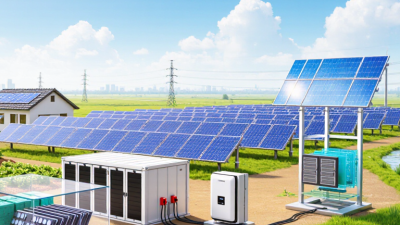
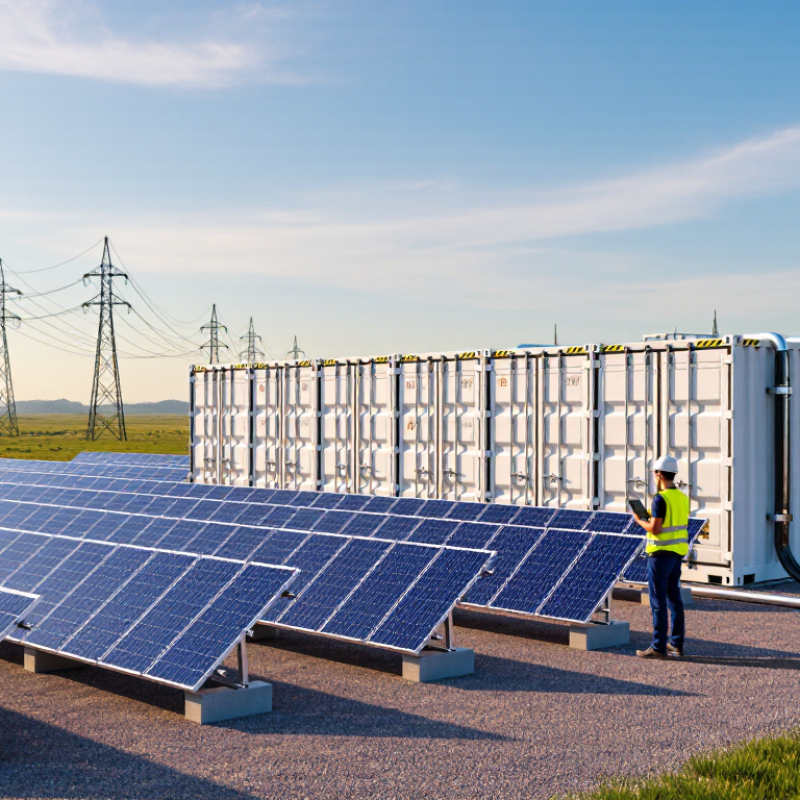
Storage is becoming a core purchasing requirement. The IEA’s Renewables 2024 report expects solar PV to provide most new renewable capacity through 2030. Buyers therefore need batteries, hybrid inverters, energy management software, and safer thermal designs. Lithium-based systems dominate current projects, while longer-duration technologies may serve grids with evening peaks. Product selection should include cycle life, warranty terms, fire testing, and local service capacity. Cheap equipment can become expensive when replacement parts arrive slowly.
Tracking systems, bifacial modules, floating solar, and agrivoltaics are also expanding product choices. In my procurement experience, site conditions often matter more than laboratory efficiency. Dust, weak grids, high humidity, and limited maintenance access can reduce real output. This is where forecasts can mislead. Buyers should request independent test data, degradation assumptions, and third-party certification. Recycling plans deserve attention too, although current industry estimates vary by technology and region. Performance claims need patience, not excitement.
In 2026, global solar buyers will find growth shaped less by module prices than by regional policy and grid readiness. Europe is tightening permitting rules while prioritizing domestic resilience, creating demand for traceable supply chains and recyclable components. North America continues to reward local manufacturing, storage pairing, and workforce investment through incentives that vary by jurisdiction. Policy still matters. Buyers should verify tax treatment, eligibility, and interconnection timelines before signing contracts.
South and Southeast Asia are expanding utility-scale and rooftop solar, especially where electricity demand is rising quickly. India’s manufacturing incentives and renewable targets may strengthen local procurement, although implementation can differ between states. The Middle East offers strong sunlight and large projects, but water use, grid flexibility, and auction conditions require careful review. African markets show promising off-grid opportunities for farms, clinics, and small businesses. Financing remains the difficult part. Currency risk and limited transmission can slow otherwise practical projects.
Latin American buyers are watching auctions, distributed generation rules, and changing import requirements. Storage is becoming more valuable where evening demand strains the grid. Still, forecasts can miss. A low-cost system may underperform if spare parts arrive late or permits remain unclear. Experienced buyers should compare yield estimates with local weather data, inspect warranty terms, and request evidence from similar operating sites. The best opportunity is rarely the cheapest quotation.
| Region | Recent Market Indicator | Key Policy Direction | 2026 Buyer-Relevant Trend | Growth Opportunity | Main Risk to Monitor |
|---|---|---|---|---|---|
| Global | Global solar PV capacity exceeded 2.2 TW at the end of 2024, while annual additions were above 450 GW according to international renewable-capacity statistics. | Governments are combining renewable-energy targets with grid-modernization, storage, local-content, and energy-security policies. | Module oversupply may keep equipment prices competitive, while bankability, traceability, and delivery reliability become more important than headline price alone. | Utility-scale PV, commercial rooftops, battery storage, hybrid solar-plus-storage plants, and power-management software. | Grid congestion, trade restrictions, currency volatility, quality variation, and project interconnection delays. |
| China | China remained the largest solar market and added well over 200 GW of solar capacity in 2024, according to national energy statistics. | The market is shifting from rapid capacity expansion toward electricity-market reform, renewable-energy consumption, and stronger grid flexibility. | High production capacity and intense domestic competition are likely to support attractive equipment pricing, but supplier financial strength requires careful review. | High-efficiency modules, utility-scale storage, desert-base projects, distributed generation, and overseas supply diversification. | Margin pressure, policy changes affecting distributed projects, export controls, and logistics or customs uncertainty. |
| European Union | EU solar additions exceeded 60 GW in 2024, keeping the region on a strong path toward its 2030 solar deployment objectives. | The revised Renewable Energy Directive sets an EU-wide renewable-energy target of at least 42.5% by 2030, with an ambition to reach 45%. | Demand will increasingly favor products with verified carbon footprints, resilient supply chains, recycling plans, and compliance documentation. | Rooftop solar, repowering, agrivoltaics, energy communities, solar-plus-storage, and electrification of heating and transport. | Permitting delays, negative-price periods, grid bottlenecks, changing subsidy schemes, and stricter sustainability requirements. |
| United States | Utility-scale solar additions exceeded 40 GW in 2024, supported by continued demand from electricity load growth and corporate procurement. | The Inflation Reduction Act continues to support clean-energy investment through tax credits, domestic-content incentives, and manufacturing provisions, subject to future policy decisions. | Storage attachment, domestic-content qualification, domestic manufacturing, and supply-chain documentation will strongly influence project economics. | Utility-scale PV, battery storage, data-center power supply, community solar, and commercial and industrial rooftops. | Tariff changes, permitting and interconnection queues, interest rates, local-content rules, and election-related policy uncertainty. |
| India | India added approximately 24 GW of solar capacity in 2024 and is expanding both utility-scale and rooftop deployment. | The country is targeting 500 GW of non-fossil electricity capacity by 2030, supported by domestic manufacturing, competitive auctions, and rooftop-solar programs. | Local-content rules and approved-supplier requirements will remain central to market access, while domestic production capacity continues to expand. | Utility-scale solar parks, rooftop systems, agricultural feeders, solar pumps, storage, and module and cell manufacturing equipment. | Transmission constraints, land acquisition, payment delays, import duties, and state-level execution differences. |
| Australia | Australia has one of the world’s highest rooftop-solar adoption rates, with distributed PV forming a significant share of new capacity. | The national target is 82% renewable electricity by 2030, supported by renewable-energy auctions, transmission investment, and storage incentives. | Household and commercial batteries, grid-forming inverters, and advanced energy-management systems will gain importance as rooftop penetration rises. | Rooftop replacement, battery retrofits, utility-scale storage, remote-grid systems, and renewable hydrogen supply chains. | Network constraints, curtailment, connection standards, extreme weather, and regional differences in electricity-market rules. |
| Brazil and Latin America | Brazil surpassed 50 GW of cumulative solar capacity in 2024, supported by strong distributed-generation growth and large-scale projects. | Policy emphasis is moving toward transmission expansion, distributed-generation regulation, competitive auctions, and improved power-market flexibility. | Distributed solar remains attractive, but curtailment and transmission availability will make project location and grid studies increasingly important. | Commercial rooftops, agribusiness, mining, distributed generation, storage for weak grids, and solar-powered irrigation. | Currency depreciation, high financing costs, grid congestion, regulatory changes, and local permitting requirements. |
| Middle East | Large solar projects continue to expand because of high solar irradiation, growing electricity demand, and national diversification strategies. | Countries are combining clean-energy targets with long-term decarbonization plans, competitive tenders, and industrial-development programs. | Large projects will increasingly be designed with storage, desalination, hydrogen production, or industrial-load integration. | Utility-scale PV, solar thermal applications, battery storage, desalination, green hydrogen, and industrial self-generation. | Extreme heat, dust soiling, water limitations, concentrated procurement, and dependence on large tender schedules. |
| Southeast Asia | Solar demand is rising across the region, although deployment remains uneven because of different market rules, grid structures, and financing conditions. | Governments are developing renewable auctions, rooftop-net-metering reforms, cross-border power-trading plans, and manufacturing incentives. | Floating solar, industrial rooftops, hybrid microgrids, and storage are expected to gain traction where land or grid capacity is constrained. | Manufacturing facilities, industrial parks, islands, remote communities, floating PV, and commercial and industrial systems. | Regulatory uncertainty, weak transmission networks, currency risk, permitting complexity, and inconsistent purchase agreements. |
| Africa | Africa has substantial solar resources but low electricity access in many markets, creating strong demand for distributed and off-grid solutions. | Policy priorities include universal electricity access, mini-grid deployment, concessional finance, renewable auctions, and regional power-pool development. | Pay-as-you-go solar, mini-grids, battery-backed systems, and commercial and industrial solar are likely to grow faster than complex utility projects in many markets. | Solar home systems, telecom power, water pumping, cold storage, healthcare facilities, schools, mining, and mini-grids. | Foreign-exchange shortages, limited project finance, weak grids, political risk, logistics costs, and payment collection challenges. |
In 2026, solar buyers will face less predictable pricing. Module costs may remain competitive, but freight, currency movements, and financing rates can change landed costs quickly. A low factory quote is not the final purchase price. Buyers should compare delivered costs, payment terms, insurance, duties, and expected replacement expenses.
Supply chains will remain exposed to port congestion, weather disruptions, and changing trade requirements. A shipment delayed by three weeks can disrupt installation schedules and increase warehouse charges. Experienced procurement teams should request production milestones, inspection records, and traceable material documentation. They should also confirm whether critical components come from a single region. That assumption can fail.
Procurement contracts need practical safeguards. Buyers can negotiate delivery windows, quality tolerances, payment stages, and remedies for repeated delays. Independent inspections before shipment may reveal packaging damage, inconsistent labeling, or performance gaps. However, inspections cannot remove every risk. Forecasts can still be wrong, especially when demand changes suddenly. Smaller buyers may also lack bargaining power and reliable market data. We have seen teams focus heavily on unit price while overlooking warranty administration and local service capacity. That is an expensive lesson. Flexible purchasing plans, approved alternatives, and modest safety stock can reduce pressure when schedules move unexpectedly. Be careful with urgent substitutions. A technically similar component may require new approvals, testing, or installation procedures.
Global solar buying in 2026 will depend on more than price and rated efficiency. Sustainability standards now influence bankability, permits, insurance, and long-term asset value. Buyers should request lifecycle carbon data, material declarations, and evidence of responsible labor practices. These documents need clear boundaries. Factory energy use, transport, installation, and end-of-life treatment should be measured separately. Vague claims create costly uncertainty.
A practical procurement strategy starts with a measurable supplier questionnaire. Ask for chain-of-custody records, recycled-material percentages, water-use data, and waste-handling procedures. Require independent testing for performance, fire safety, durability, and degradation. Check whether certificates match the exact product and production site. They often do not. Site audits can reveal damaged packaging, poor worker protection, or inconsistent sorting that spreadsheets miss. Use contracts to define corrective actions, reporting dates, and consequences for missing evidence.
Global buyers also need regional thinking. A module designed for dry heat may perform differently under snow, salt mist, humidity, or unstable grids. Include climate stress tests and maintenance access in technical evaluations. Digital product records can improve traceability, but only when suppliers update them consistently. That remains a weak point. Standards evolve, and smaller suppliers may struggle with testing costs. Buyers should offer realistic timelines while maintaining non-negotiable safety and human-rights requirements. One uncomfortable lesson remains: the cheapest compliant option is not always the most sustainable. Sometimes, delaying a purchase is wiser than accepting incomplete evidence.
Global solar PV capacity additions increased sharply from 2019 to 2024, strengthening the case for buyers to prioritize transparent sustainability standards, lifecycle traceability, responsible sourcing, and long-term performance when planning 2026 procurement strategies.
Data source: International Renewable Energy Agency (IRENA), Renewable Capacity Statistics 2025. Values represent global solar power capacity additions in GW.
For 2026 purchasing decisions, global buyers should combine cost analysis with verified environmental data, supply-chain due diligence, recyclability planning, carbon-footprint disclosure, and compliance with applicable labor and responsible-sourcing requirements.